Bridges are among the most critical components of our transportation networks, carrying thousands of vehicles every day over waterways, valleys and other obstacles. Maintaining their structural integrity is a responsibility that demands precision, technical depth and innovation.
Ulteig delivers a full spectrum of specialized bridge inspection and maintenance services that combine advanced technologies, field-tested expertise and a multidimensional engineering approach to meet the most challenging structural demands. From underwater inspections to rope access, routine inspections and non-destructive testing, Ulteig equips asset owners with the data, insights and recommendations needed to preserve their infrastructure and meet state and federal compliance standards.
In this article, we will discuss the rigor and expertise required for bridge inspections and how they impact transportation projects.
Underwater Inspection: Advanced Capabilities Below the Surface
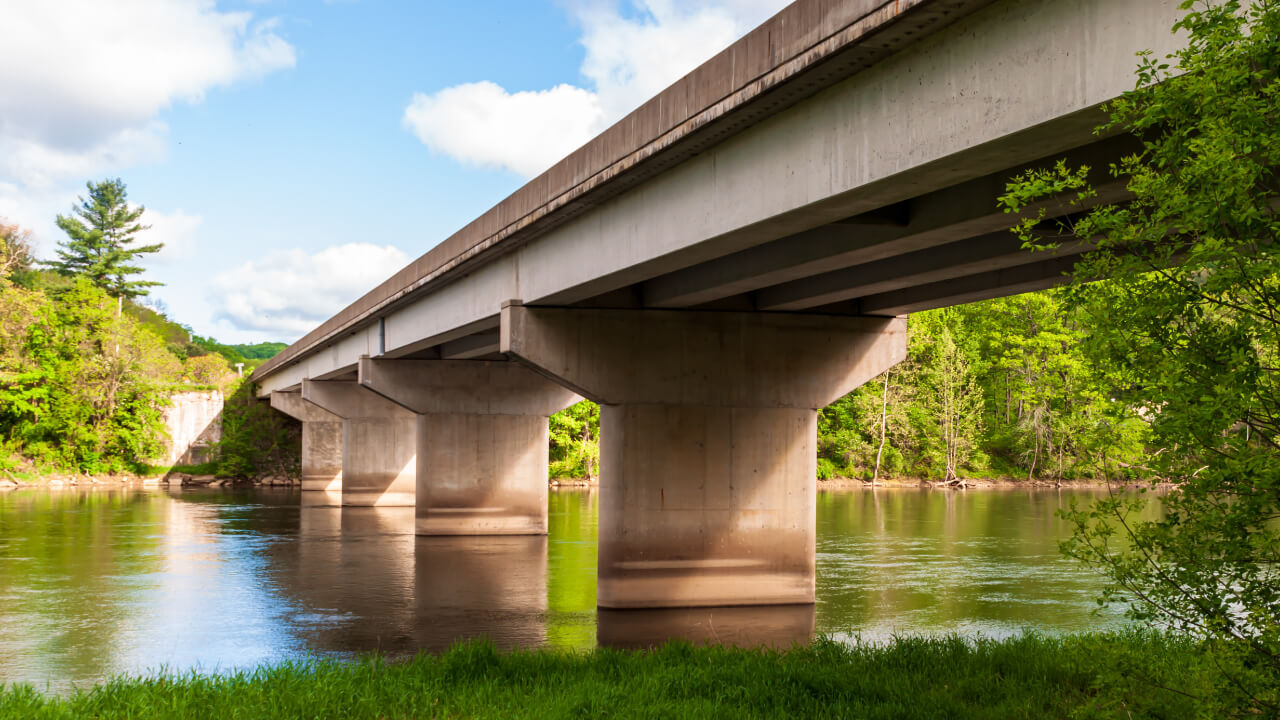
The collapse of the Schoharie Creek Bridge in 1987 significantly impacted the inspection methods used for bridge substructures across the United States. The incident led the Federal Highway Administration to strengthen the National Bridge Inspection Standards, which now require underwater inspections for bridges with substructure elements located in water. Today, these inspections remain some of the most specialized in the industry, requiring commercial diving credentials and completion of the National Highway Institute Course 130091.
In recent years, inspection capabilities have expanded with the integration of new technologies. Among the most significant advances is the use of Underwater Acoustic Imaging (UAI) to create detailed maps of the channel bottom and submerged structural elements. When combined with LiDAR imaging above the waterline, this approach can provide a comprehensive three-dimensional representation of the bridge.
Rope Access: Safe, Precise, Efficient
Some bridge components are located in areas where traditional access methods are impractical or cost-prohibitive and/ or involve Non-Redudant Steel Tension Members (NSTM) that require close up hands on visual inspection. Rope access enables inspectors to safely reach and evaluate hard-to-access areas, particularly on aging bridges with weight restrictions. Unlike drones, rope access enables physical interaction with the structure, from scraping paint to hammering concrete and conducting ultrasonic testing. This method increases inspection accuracy, reduces operational impact and expands the range of bridges that can be thoroughly inspected.
Ulteig’s rope access program provides a safe and flexible alternative. The team includes four SPRAT-certified professionals, trained to perform close-up, hands-on inspections, Non-Destructive Testing (NDT) and detailed documentation, all without the need for heavy equipment or extended traffic closures.
Minor Structures: Addressing Hidden Risks
Non-qualifying structures, less than 20 feet in length, present unique inspection challenges due to difficult access and confined spaces. Ulteig’s team uses specialized tools such as rolling boards and remote control vehicles to safely and effectively inspect these structures. Through participation in the Colorado Department of Transportation minor inspection program, Ulteig has inspected approximately 60 minor structures in southwestern Colorado. These inspections help owners identify and prioritize repairs, track condition over time and assess waterway adequacy.
Non-Destructive Testing: Seeing Beyond the Surface
Ulteig has invested in building in-house expertise in non-destructive testing to enhance inspection accuracy and provide owners with a clearer understanding of their assets. NDT techniques such as magnetic particle testing, dye penetrant testing and ultrasonic testing enable inspectors to detect surface and subsurface flaws that may not be visible during visual inspections. This is especially beneficial for steel components, fracture-critical elements and ancillary structures.
Routine Inspections: Consistency and Quality at Scale
Ulteig provides routine bridge inspection services for state DOTs and local agencies throughout the Mountain West, Midwest and Southwest. The team includes 14 certified NBIS team leaders strategically located in Colorado, Texas, South Dakota, North Dakota and Louisiana.
Each inspector receives training beyond standard NHI coursework, including drone pilot certification and advanced NDT methods such as dye penetrant, magnetic particle and resistograph testing.
Ulteig’s inspection teams are cross-trained in bridge design and load rating, which elevates the quality of their reports from basic condition assessments to actionable rehabilitation and repair recommendations. Rigorous quality control processes ensure consistency and accuracy. Each report undergoes independent review by a certified team leader and oversight from a dedicated quality manager. Tailored guidance documents for each client guarantee inspections align with specific expectations and reporting standards.
A Multidisciplinary Approach to Infrastructure Stewardship
Bridge inspections demand a coordinated approach that integrates field expertise, advanced technology and engineering insight. Ulteig’s multidimensional capabilities enable clients to meet federal and state compliance standards, extend the life of critical infrastructure and ensure public safety. By combining underwater inspection, rope access, routine inspection, minor structure assessment and advanced NDT, Ulteig delivers comprehensive solutions tailored to each structure’s unique demands.
For transportation leaders, cities, counties and DOTs, this approach means trusted results, minimized operational disruptions and a partner capable of solving the most complex access and inspection challenges. For Ulteig, it reflects an ongoing commitment to safety, innovation and engineering excellence.
Ulteig Inspection Team Leadership Article Contributors
- Ryan Hafer, Interim Bridge Leader
- Sam Cabrera, Bridge Inspection Engineer
- Eric Jones, Bridge Inspector
- Charlie Peterson, Engineer
- Alex Rodriguez, Engineer – Structural
- Matt Henderson, Lead Bridge Engineer
- Melake Brhanemeskel, Bridge Inspection Engineer
- Angela Whittle, Graduate Engineer – Civil
Discover Ulteig’s comprehensive Bridge and Structural Engineering services.